





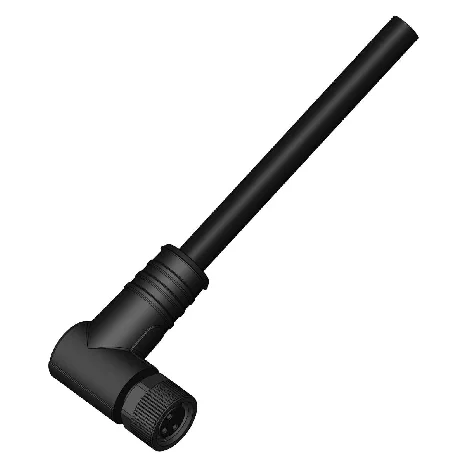
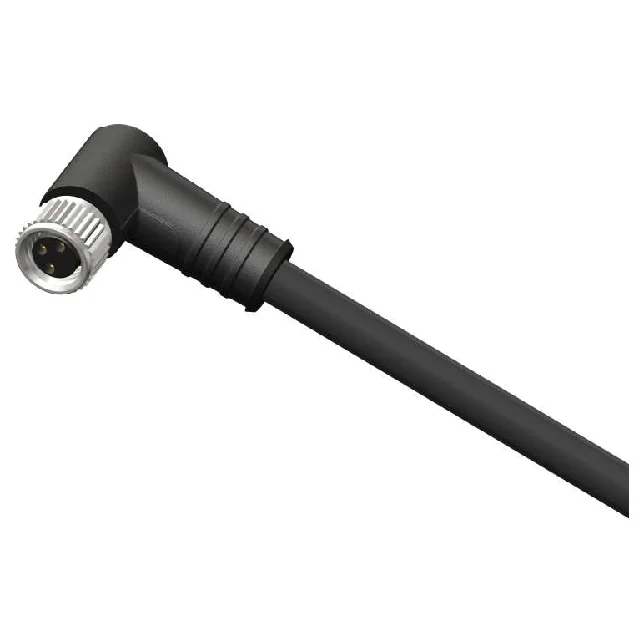
The M8 Connector: Compact Industrial Connectivity
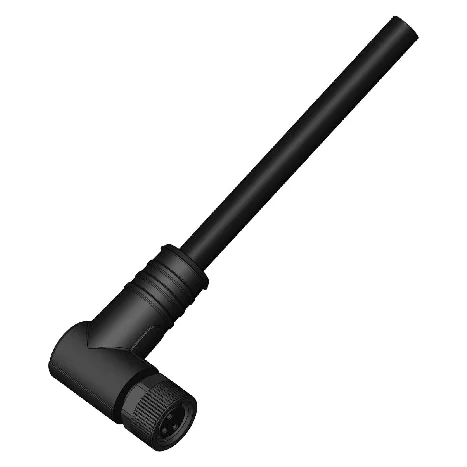
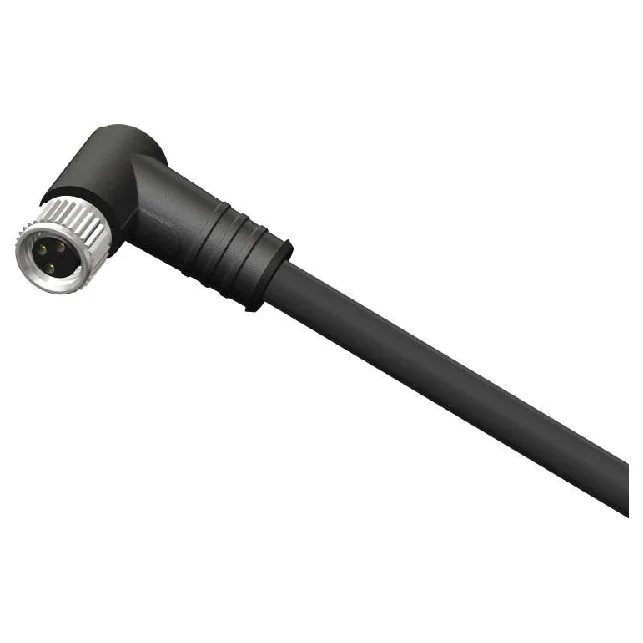
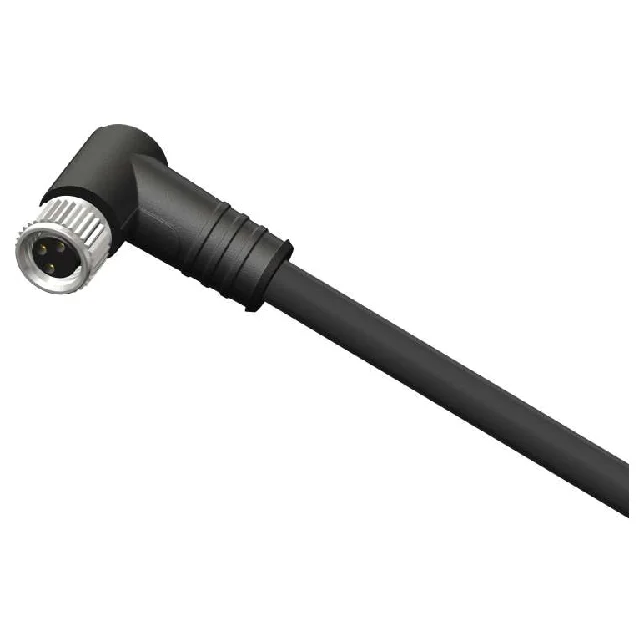
The M8 circular connector is the compact sibling to the M12 — defined under IEC 61076-2-104 with an 8 mm threaded coupling. Where space and weight matter (miniature sensors, valve manifolds, mobile robotics, IO-Link slave devices), the M8 delivers a robust IP67-rated connection in less than half the footprint of a comparable M12. Katlax manufactures the full M8 portfolio at our Santej, Gandhinagar facility — A-coded, B-coded, and D-coded variants across 3 / 4 / 5 / 6 / 8 pin configurations, all TUV Rheinland EN/IEC certified.
M8 is the default choice for sensor-side connections in space-constrained machinery: inductive proximity sensors, photoelectric switches, miniature limit switches, valve solenoids, encoder feedback on small servos. When an M12 won't fit on the sensor body and a hardwired pigtail isn't reusable, M8 closes the gap.
M8 Coding Variants — A, B, D
M8 inherits the coding-key concept from its larger M12 sibling — a small mechanical feature inside the housing that prevents a signal cable from mating with an Ethernet socket (or vice-versa). M8 supports three codings, each mapped to a specific signal class:
| Coding | Pins | Primary use case | Notes |
|---|---|---|---|
| A-Coded | 3 / 4 / 6 / 8 | Sensors, actuators, low-voltage signal | The standard M8. Default for proximity, photoelectric, magnetic switches. 4-pin is the most widely deployed configuration. |
| B-Coded | 5 | Fieldbus (small-format) | Reverse-keyed from A for fieldbus and IO-Link applications where keying must prevent miswiring. |
| D-Coded | 4 | Industrial Ethernet (Cat-5e, 100 Mbit) | Shielded 4-pin Ethernet in the compact M8 form factor. Common on small Industrial-Ethernet sensors, IO-Link masters, AGV boards. |
For higher-pin or higher-current applications, use the M12 family. M8 caps out around 4 A per pin and ~60 V — beyond that you need the larger thread. Full wire-colour reference for every M8 coding lives on the Pin Assignment & Wire Colour Code page.
Pin Configurations and Wire-Colour Codes
Standard IEC 60757 wire colours for the most common A-coded M8 variants:
| Pin | 3-Pin (A) | 4-Pin (A) | 6-Pin (A) | 8-Pin (A) |
|---|---|---|---|---|
| 1 | BN (Brown) | BN (Brown) | BN (Brown) | WH (White) |
| 2 | — | WH (White) | WH (White) | BN (Brown) |
| 3 | BU (Blue) | BU (Blue) | BU (Blue) | GN (Green) |
| 4 | BK (Black) | BK (Black) | BK (Black) | YE (Yellow) |
| 5 | — | — | GY (Grey) | GY (Grey) |
| 6 | — | — | PK (Pink) | PK (Pink) |
| 7 | — | — | — | BU (Blue) |
| 8 | — | — | — | RD (Red) |
M8 B-coded 5-pin and D-coded 4-pin follow distinct sequences — the complete reference has the tables and face-view diagrams per coding.
Technical Specifications
- Standard: IEC 61076-2-104 (signal / data), IEC 61076-2-114 references for higher-current variants.
- IP rating: IP67 standard when mated (immersion to 1 m / 30 min per IEC 60529); cap unmated ports with IP67 dust caps.
- Current rating: Up to 4 A per contact (varies by coding and contact area).
- Voltage: 60 V AC/DC standard for signal/data variants.
- Mating cycles: 100 minimum per IEC 61076-2-104; field-tested to 500+ in industrial environments.
- Operating temperature: −25 °C to +85 °C standard; extended ranges available with TPE jacket.
- Vibration / shock: Per IEC 60068-2-6 (10–55 Hz, 1.5 mm) and IEC 60068-2-27 (50 G, 11 ms half-sine).
Cable Material — PVC, PUR, or TPE?
- PVC — general-purpose, cost-optimised. Suitable for static installations in dry, room-temperature environments. Not recommended for continuous flex.
- PUR (polyurethane) — abrasion-resistant, oil-resistant, suitable for drag-chain and high-flex applications (machine tools, robotics, AGVs). 5–10× the flex life of PVC.
- TPE (thermoplastic elastomer) — chemical-resistant, food-safe options available. Used in food processing, pharma, washdown environments.
Datasheets for every cable jacket option live in the downloads section.
How to Select the Right M8 Connector
- What's the signal? Sensor (A-coded), fieldbus (B-coded), Industrial Ethernet (D-coded).
- How many pins? Most sensors are 3 or 4-pin. Count signals + power.
- Male or female? Convention: the device-side connector is female; the cable-side connector is male.
- Cable length? Standard 2 m, 5 m, 10 m off-the-shelf; custom to 30 m on a single pre-terminated SKU.
- Cable jacket? PVC for static, PUR for flex, TPE for chemical/food-safe.
- Termination? Pre-molded (factory IP67 seal — recommended for new builds) or field-attachable.
Stuck between configurations? Send your application requirements and our engineering team will quote within 24 business hours.
Applications
- Factory automation: Inductive proximity sensors, photoelectric switches, miniature limit switches, IO-Link slave devices. 4-pin A-coded dominates.
- Valve and actuator banks: Direct-connect valve manifolds where M12 won't fit on the valve body.
- Mobile robotics / AGVs: Compact, vibration-immune connections on AGV navigation sensors and motor feedback.
- Encoders: Small servo motor encoder feedback (M8 4-pin or 5-pin).
- Industrial Ethernet edge devices: M8 D-coded for small IIoT sensors, Industrial-Ethernet-enabled measurement modules.
- Building automation: Compact HVAC sensors, occupancy detectors, intelligent lighting where M12 is overkill.
Why Katlax for M8
With 30+ years of manufacturing experience and ISO 9001:2015 certification, Katlax supplies M8 connectors to 4,000+ customers across 35+ countries. Vertically integrated manufacturing means injection moulding, cable processing, over-moulding, and 100% electrical + IP-leak testing all happen under one roof in Gandhinagar.
Certifications: TUV Rheinland EN & IEC (M8 series, certificate R 60113557), CE, UL (Subject-764 traceability), UKCA, ISO 9001:2015, plus self-declaration on RoHS and REACH. All certificates downloadable from our downloads page.
Lead times: standard SKUs 1–2 weeks ex-works; custom cable assemblies 3–4 weeks; OEM private-label runs from 500 pieces with 8–12 week tooling.
Browse, Compare, and Quote
Use the filter sidebar above to narrow by coding, pin count, gender, cable length, or jacket material. Click any product card for the full datasheet and a one-click request-for-quote form.